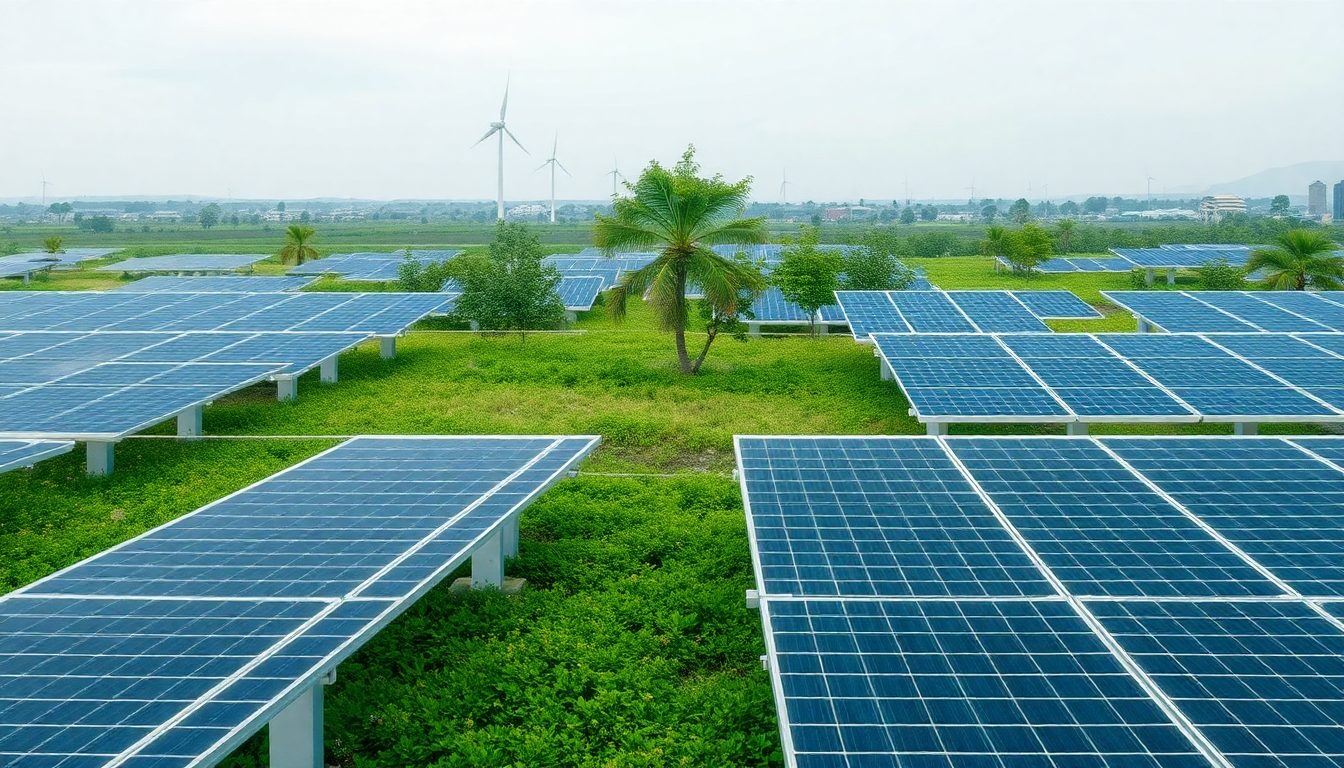
The Promise vs. The Reality: Why "Clean" Isn't Always Simple
Let me take you back to 2019. I was standing in a lithium mine in Chile's Atacama Desert, watching trucks extract the white gold that powers our electric revolution. The air was thick with dust, and nearby lagoons were evaporating at alarming rates. Right there, I realized something uncomfortable: saving the planet with technology is more complicated than just swapping gas for electric.
We've been sold the idea that clean technology is a silver bullet. Solar panels, wind turbines, electric vehicles—they're supposed to be guilt-free solutions to the climate crisis. But the environmental impact of clean technology exists on a spectrum, and if we're serious about sustainability, we need to talk about the full picture: the wins, the losses, and the messy gray areas in between.
🌍 The Bottom Line Up Front
Clean technology reduces lifetime carbon emissions by 80-90% compared to fossil fuels, but creates new challenges: mining impacts, electronic waste, and land use conflicts. The net impact is overwhelmingly positive, but only if we address these secondary effects aggressively.
Understanding the Clean Tech Environmental Footprint
Before we dive into specific technologies, let's establish what we mean by "environmental impact" in this context. It's not just about carbon dioxide. When we analyze renewable energy lifecycle assessments, we're looking at:
- Embodied carbon: Emissions from manufacturing and transporting equipment
- Resource extraction: Mining for lithium, cobalt, rare earth elements, and silicon
- Land use changes: Habitat disruption from solar farms and wind parks
- End-of-life waste: What happens when solar panels and batteries die
- Water consumption: Often overlooked, but critical for manufacturing and cooling
The good news? Even accounting for all these factors, clean technology still wins by a landslide against fossil fuels. The bad news? We're repeating some of the same extractive patterns that got us into this mess.
Solar Power: The Bright Side Has Some Shadows
Solar energy is the darling of the clean tech world, and for good reason. Once installed, a solar panel produces clean electricity for 25-30 years with zero emissions. But let's look at the carbon payback period—the time it takes for a panel to generate the energy used to create it.
The Manufacturing Reality
Producing solar panels is energy-intensive. Currently, most panels are manufactured in China using coal-heavy electricity grids. This means your "clean" solar panel starts with a carbon debt of about 1-4 years of operation, depending on where it was made and installed.
However, as grids get cleaner (thanks to... more solar), this payback period is dropping rapidly. Newer panels manufactured in regions with renewable energy can pay back their carbon debt in under a year.
| Technology | Carbon Payback | Lifespan | Net CO₂ Reduction |
|---|---|---|---|
| Solar PV (Silicon) | 1-4 years | 25-30 years | 85-90% |
| Wind Turbine | 3-6 months | 20-25 years | 95%+ |
| Lithium Battery | 2-3 years | 10-15 years | 70-80% |
| Coal Plant | N/A | 40 years | Baseline |
The Waste Problem We're Ignoring
Here's the uncomfortable truth: we're about to face a solar waste tsunami. By 2050, the International Renewable Energy Agency (IRENA) projects 78 million tonnes of solar panel waste globally. These panels contain heavy metals like lead and cadmium that can leach into soil if not properly recycled.
The recycling infrastructure isn't ready yet. Currently, less than 10% of decommissioned panels are recycled effectively. The rest go to landfills. If you're considering installing solar at home, ask your installer about end-of-life recycling programs.
Wind Energy: Cleaner Than Clean, But Not Perfect
Wind turbines have the fastest energy payback time of any clean technology—just 3 to 6 months to offset the energy used in their construction. They're also 85-95% recyclable, with the steel, copper, and aluminum components easily reclaimed.
The Blade Dilemma
The catch? Those massive fiberglass blades. They're incredibly difficult to recycle due to their composite materials. Thousands of turbine blades end up buried in special landfills or cut up for construction materials. It's not ideal, but compared to the billions of tonnes of coal ash produced annually, it's a manageable problem.
Innovation is coming, though. Companies are now developing fully recyclable blades using thermoplastic resins instead of thermoset composites. By 2030, blade waste should be a solved problem.
Electric Vehicles: The Mining Elephant in the Room
This is where clean technology's environmental impact gets really complicated. An EV produces zero tailpipe emissions, which is fantastic for urban air quality. But manufacturing an EV battery creates 3-4 times more emissions than manufacturing a conventional car engine.
The Lithium and Cobalt Crisis
To understand the real impact, we need to talk about extraction. A single EV battery requires:
- 8-10 kg of lithium: Extracted by pumping brine from under salt flats, destroying water tables in drought-prone regions like Chile and Argentina
- 20-30 kg of cobalt: 70% comes from the Democratic Republic of Congo, where artisanal mining often involves child labor and severe soil contamination
- 60+ kg of graphite: Mining creates dust pollution and habitat destruction
The water usage is staggering. Producing one ton of lithium requires approximately 500,000 gallons of water. In Chile's Atacama, lithium mining has reduced water levels by 30% in some areas, affecting local flamingo populations and indigenous farming communities.
⚠️ The Ethical Dilemma
If you're buying an EV for environmental reasons, research the manufacturer's battery supply chain. Companies like Tesla and BMW are investing in cobalt-free batteries (LFP chemistry), while others are improving traceability to avoid conflict minerals.
The Net Impact: Why It's Still Worth It
Despite these challenges, the math is clear. Over their lifetime, EVs produce 50-70% fewer emissions than gas cars (depending on the electricity grid mix). Even when powered by coal-heavy grids, they break even after 2-3 years. In regions with clean grids like Norway or Costa Rica, that payback drops to under a year.
But we can't stop at "better than fossil fuels." We need circular economy solutions:
- Battery recycling: Redwood Materials and Li-Cycle are achieving 95%+ recovery rates for lithium, cobalt, and nickel
- Second-life batteries: EV batteries with 70% capacity are being repurposed for stationary energy storage
- Bio-mining: Using bacteria to extract metals from waste, reducing the need for new mining
- Sodium-ion batteries: Emerging technology using abundant sodium instead of lithium, eliminating supply chain issues
Hydrogen: The Dark Horse with a Dirty Secret
Green hydrogen (made with renewable electricity) is being touted as the solution for heavy industry and shipping. It's genuinely clean at the point of use—only water vapor comes out of the exhaust.
But currently, 96% of hydrogen is produced from natural gas ("gray hydrogen"), emitting 9-12 kg of CO₂ per kg of hydrogen. Even "blue hydrogen" (gas with carbon capture) still has a massive methane leakage problem. Green hydrogen is the only truly clean option, but it requires enormous amounts of renewable energy to produce.
Smart Cities and AI: The Invisible Impact
We often forget that digital clean tech has a physical footprint. Smart grids, AI-optimized energy systems, and IoT sensors reduce overall energy consumption, but data centers powering these systems consume 1% of global electricity.
The solution? Locating data centers in cold climates (reducing cooling costs) and powering them directly with renewable energy. Google and Microsoft are already operating 24/7 carbon-free data centers in some regions.
What You Can Actually Do About It
Feeling overwhelmed? Here's your action plan as a conscious consumer:
For Homeowners
When installing home energy systems, prioritize:
- Panel recycling: Choose manufacturers with take-back programs (First Solar, SunPower)
- Battery chemistry: Consider LFP (lithium iron phosphate) batteries—they last longer and use no cobalt
- Efficiency first: Insulate your home before sizing your solar system. A smaller system has less embodied carbon
For Consumers
Buying electronics? The Right to Repair movement is crucial for clean tech. A smartphone kept for 5 years instead of 2 reduces its lifetime carbon footprint by 40%. Look for devices with replaceable batteries and modular components.
For Investors
If you're investing in clean tech, look beyond the technology itself. Companies solving the waste problem—battery recyclers, rare earth recovery firms, circular economy platforms—are the next unicorns.
Frequently Asked Questions
Is clean technology actually worse for the environment than fossil fuels?
No. Lifecycle assessments consistently show that even accounting for manufacturing impacts, renewable energy and EVs produce 70-95% fewer emissions over their lifetime compared to fossil alternatives. However, we need to scale up recycling and ethical sourcing to minimize the remaining 5-30% impact.
How long until solar panels pay back their environmental cost?
Energy payback time is 1-4 years depending on manufacturing location and technology. Carbon payback is improving rapidly as grids get cleaner. Modern panels made with renewable energy can pay back their carbon debt in under 12 months.
What happens to solar panels and batteries when they die?
Currently, only 10% of solar panels are recycled effectively, and about 5% of lithium batteries. However, regulations are tightening. The EU now mandates 85% recycling rates for batteries, and the US is following suit. By 2030, recycling infrastructure should handle the coming wave of clean tech waste.
Are there truly "green" alternatives to lithium batteries?
Sodium-ion batteries (using salt) are entering the market and could replace lithium for stationary storage. For EVs, solid-state batteries promise higher energy density with less material. Hydrogen fuel cells work well for heavy transport. However, lithium will remain dominant for the next decade, making ethical sourcing and recycling critical.
Does clean technology use more water than fossil fuels?
It depends on the technology. Solar PV uses less water than thermal power plants (coal, gas, nuclear). However, lithium extraction is extremely water-intensive. Wind power uses virtually no water. Overall, the water footprint of renewables is 1/50th to 1/200th that of fossil fuels per unit of energy.
The Path Forward: Regenerative Technology
We're moving beyond "less bad" toward "actually good." The next generation of clean technology aims to be regenerative—improving the environment while delivering energy.
Imagine solar panels that require no rare minerals, made from abundant materials like perovskites. Picture batteries that sequester carbon in their structure, or wind turbines that provide artificial reefs for marine life when installed offshore. This isn't science fiction; it's in development now.
The environmental impact of clean technology today is a transitionary cost. Yes, mining lithium damages landscapes today. But every battery we put on the grid displaces fossil fuel extraction that would have caused infinitely more damage over decades of operation.
We're in the messy middle of the transition. It's imperfect, it's complicated, and it requires us to hold two truths simultaneously: clean tech is our best hope for the climate, and we must continuously improve its environmental footprint.
Conclusion: Complexity Isn't Excuse for Inaction
Clean technology isn't perfect, but perfection is the enemy of progress. The environmental impact of our current clean tech stack is orders of magnitude better than continuing with fossil fuels, even accounting for mining, manufacturing, and waste challenges.
The question isn't whether we should adopt clean technology—we must. The question is whether we'll do it thoughtfully, with circular economy principles, ethical sourcing, and end-of-life planning built in from the start.
Your next electric vehicle won't save the planet single-handedly. But combined with renewable energy, battery recycling, and smart consumption, it's part of a system that actually can. The green paradox resolves itself when we commit to continuous improvement, not just initial adoption.
The technology is clean. Let's make sure the entire lifecycle follows suit. 🌱