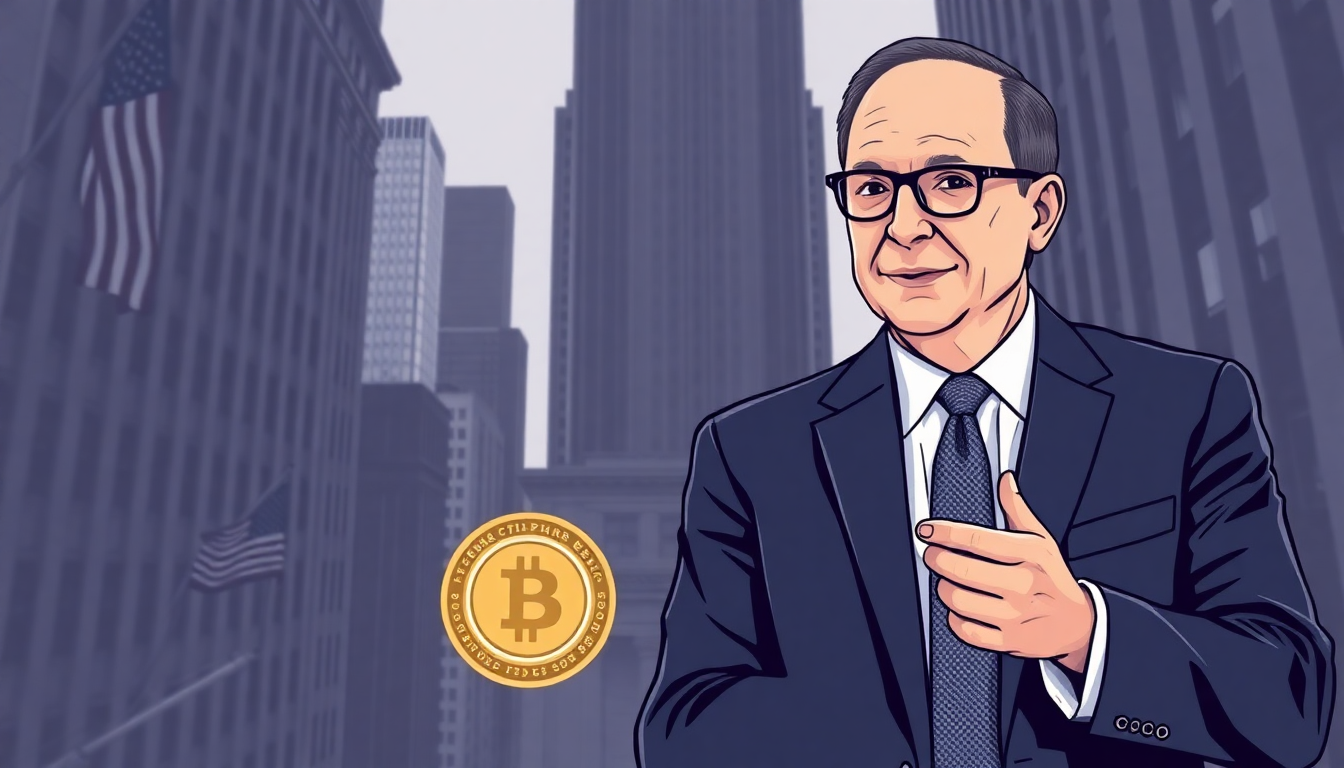
BlackRock CEO Larry Fink Has Changed His Stance on Bitcoin: The Shift Reshaping Wall Street
The most powerful voice in global finance just admitted he was wrong. Larry Fink, the chief executive who built BlackRock into a thirteen trillion dollar asset management empire, once dismissed Bitcoin as nothing more than an index for money laundering. Speaking at the New York Times DealBook Summit, Fink openly acknowledged his transformation, calling it a very glaring public example of a big shift in his opinions. For an industry that has long viewed cryptocurrency with skepticism, this represents far more than one man's change of heart. It signals a fundamental realignment between traditional finance and digital assets.
When the CEO of the world's largest asset manager reverses course so publicly, markets listen. Fink's admission carries weight precisely because BlackRock does not merely participate in financial markets. It shapes them. The firm's investment decisions influence pension funds, sovereign wealth funds, and institutional portfolios across the globe. Understanding why Larry Fink changed his mind about Bitcoin offers crucial insights into where institutional capital flows next and what this means for the future of digital asset adoption.
🎯 Key Insight
Larry Fink's Bitcoin pivot represents the most significant institutional endorsement in cryptocurrency history. When BlackRock's CEO admits he was wrong, it validates what early adopters have known for years.
From Critic to Believer: The Larry Fink Bitcoin Transformation
Fink's journey from vocal skeptic to measured advocate did not happen overnight. Years ago, he publicly characterized Bitcoin as an instrument for illicit financial activity, echoing concerns shared by many traditional finance executives at the time. This position aligned with mainstream Wall Street sentiment, which viewed cryptocurrency as a speculative bubble at best and a threat to monetary stability at worst.
The transformation became undeniable during his appearance alongside Coinbase CEO Brian Armstrong at the DealBook Summit. Fink described Bitcoin as an asset of fear, explaining that investors frequently purchase it in response to concerns about financial security, geopolitical instability, and the ongoing debasement of traditional currencies caused by expanding government deficits. This characterization, while acknowledging Bitcoin's volatility, represents a dramatic departure from his earlier dismissal of the asset class.
The nuance in Fink's current position deserves attention. He recognizes Bitcoin's dual nature as both a trading instrument and a hedge against systemic risk. For short-term traders, he warns about the challenges of market timing in such a volatile asset. For long-term holders, however, he sees meaningful portfolio impact when Bitcoin functions as insurance against broader economic uncertainty. This sophisticated understanding reflects years of engagement with cryptocurrency markets rather than superficial analysis.
What Changed the Mind of Wall Street's Most Powerful CEO?
Fink himself attributes his evolution to years of client interactions and discussions with policymakers. As the head of an institution managing trillions in assets, he occupies a unique position to observe shifting sentiment among the world's largest investors. When sovereign wealth funds, pension managers, and corporate treasurers began asking about Bitcoin allocation strategies, Fink could not afford to dismiss their interest.
The data proved persuasive. Market movements that once seemed random to traditional analysts began revealing patterns tied to macroeconomic events. Fink noted that Bitcoin drawdowns often correlate with broader developments such as trade negotiations with China or potential geopolitical settlements. This correlation with real-world events demonstrated that cryptocurrency markets had matured beyond pure speculation into instruments reflecting genuine economic sentiment.
Perhaps most significantly, Fink emphasized that smart people change their minds when new information emerges. They adapt. They evolve. They embrace these shifts as signs of intelligence rather than weakness. This philosophical stance, articulated by someone who has guided BlackRock through multiple financial crises, suggests that institutional finance is entering a period of genuine openness toward digital assets. The dogmatic refusal to reconsider positions, Fink implied, belongs to a previous era of financial thinking.
The Institutional Learning Curve
What we are witnessing now is not excitement. It is alignment. Markets move first, narratives catch up later. Fink's public acknowledgment represents the culmination of a private learning process that has unfolded across boardrooms and investment committees for years. Many European bank CEOs and fund managers, according to industry observers, share this changed perspective even if they have not yet announced it publicly.
The institutional learning curve has already turned a corner. When the world's largest asset manager publicly acknowledges a shift, it tells you that sophisticated investors have completed their due diligence. The questions have moved from whether cryptocurrency deserves consideration to how institutions should allocate capital within this emerging asset class.
BlackRock's Billion-Dollar Bitcoin Bet
Fink's words carry additional weight because BlackRock has backed them with substantial action. The firm now offers several cryptocurrency products, most notably the iShares Bitcoin Trust ETF, which has attracted billions in assets under management since its launch. This financial commitment transforms philosophical musings into concrete business strategy.
The contrast between Fink's earlier skepticism and BlackRock's current crypto offerings could not be starker. An institution that once questioned Bitcoin's legitimacy now facilitates institutional access to the asset through regulated investment vehicles. This evolution reflects broader regulatory clarity that has made cryptocurrency investment palatable to traditional financial institutions.
Brian Armstrong, seated beside Fink during their DealBook conversation, offered a definitive assessment. There is no chance that Bitcoin goes to zero, the Coinbase CEO stated. Fink shared this optimistic view, declaring that he sees a big, large use case for Bitcoin as the asset continues maturing. These statements from two of the most influential figures in finance and cryptocurrency represent a remarkable convergence of perspectives.
Beyond Bitcoin: The Tokenization Vision
Fink's vision extends far beyond simply offering Bitcoin investment products. BlackRock has been developing technology to tokenize a wide range of assets, including real estate, equities, and bonds. This initiative positions the firm at the forefront of a transformation that could reshape how traditional financial instruments are issued, traded, and settled.
The scale of this opportunity is substantial. Fink noted that global digital wallets currently hold over four and a half trillion dollars across cryptocurrency, stablecoins, and tokenized assets. Much of this capital sits outside the United States, presenting opportunities to reach new investors who have been underserved by traditional financial infrastructure.
Bitcoin as Digital Gold: The New Institutional Narrative
Fink's current characterization of Bitcoin draws explicit parallels to gold. Both assets serve as hedges against currency debasement and geopolitical uncertainty. Both attract investors seeking protection from the erosion of purchasing power caused by expansive monetary policy. This framing places Bitcoin within a familiar investment framework that institutional investors already understand.
The digital gold narrative offers several advantages for institutional adoption. It emphasizes Bitcoin's scarcity properties, with the twenty-one million coin cap mirroring gold's finite supply. It highlights the asset's independence from government control, appealing to investors concerned about monetary policy interventions. Most importantly, it provides a mental model for portfolio allocation that fits within existing risk management frameworks.
However, Fink acknowledges important distinctions between Bitcoin and traditional safe-haven assets. Bitcoin remains heavily influenced by leveraged players, creating volatility that gold does not exhibit. Market movements can be dramatic, with twenty to twenty-five percent drawdowns occurring in response to news events. Investors must understand these characteristics when allocating capital to cryptocurrency.
Portfolio Insurance for the Modern Era
Despite the volatility, Fink suggests that Bitcoin can serve as meaningful portfolio insurance for those holding it as a hedge rather than for short-term trading. This recommendation represents a significant evolution from his previous position. The CEO of BlackRock is effectively endorsing Bitcoin as a legitimate component of diversified investment portfolios.
For institutional investors, this endorsement removes significant career risk from Bitcoin allocation decisions. When the head of the world's largest asset manager validates cryptocurrency as portfolio insurance, pension fund managers and corporate treasurers can justify exposure to their boards and stakeholders. The reputational risk of Bitcoin investment diminishes considerably.
Tokenization and the Future of Finance
Fink's enthusiasm extends beyond Bitcoin to the broader potential of asset tokenization. He argues that tokenization could allow cryptocurrency entrants to access traditional long-term products like retirement funds. This vision suggests a future where digital asset infrastructure and traditional finance merge rather than compete.
The implications are profound. Tokenization promises to democratize access to investment opportunities previously available only to wealthy individuals and institutions. Real estate fractionalization, private equity participation, and alternative asset exposure could become accessible through digital wallets to anyone with an internet connection.
Fink believes we are just at the beginning of the tokenization of all assets. This statement from someone who helped build the modern exchange-traded fund industry suggests that tokenization could represent the next major evolution in financial market structure. Just as ETFs transformed how investors access stock and bond markets, tokenization could reshape how all assets are held and transferred.
The Convergence of Traditional and Digital Finance
In a joint op-ed with BlackRock COO Rob Goldstein, Fink argued that the digital issuance of traditional assets marks a structural change in global markets. His message was clear. Digital markets are no longer a side story. They are becoming part of the core infrastructure of finance.
This position represents a remarkable turn for institutions like BlackRock and JPMorgan that once aggressively denounced digital assets. What prompted the change remains partially unclear. Some observers point to regulatory developments that have made cryptocurrency investment more palatable. Others note the technological maturation that has made institutional-grade custody and trading infrastructure available. Regardless of the specific catalysts, the shift is undeniable.
What This Means for Everyday Investors
Fink's transformation carries practical implications for individual investors navigating the cryptocurrency landscape. The institutional endorsement validates what early adopters have long believed about Bitcoin's potential. It suggests that the asset has transitioned from speculative experiment to legitimate financial instrument in the eyes of mainstream finance.
For those considering Bitcoin investment, Fink's analysis offers a framework for thinking about allocation. The asset functions differently depending on investment horizon and objectives. Short-term traders face the challenge of extreme volatility and market timing. Long-term holders can view Bitcoin as portfolio insurance against currency debasement and geopolitical uncertainty.
The availability of regulated investment vehicles like BlackRock's Bitcoin ETF removes many barriers that previously prevented traditional investors from accessing cryptocurrency markets. Investors can now gain Bitcoin exposure through familiar brokerage accounts without managing private keys or navigating cryptocurrency exchanges. This accessibility will likely accelerate institutional and retail adoption.
Preparing for Continued Volatility
Despite the institutional validation, Fink's comments also serve as a reminder of Bitcoin's inherent volatility. The asset remains subject to dramatic price swings driven by leverage, regulatory developments, and macroeconomic events. Investors must size their positions appropriately and avoid overexposure that could force selling during inevitable drawdowns.
The influence of leveraged players that Fink mentioned deserves particular attention. When institutional capital flows into Bitcoin derivatives and lending products, it creates new dynamics that can amplify both upward and downward price movements. Understanding these mechanics becomes essential for anyone allocating significant capital to cryptocurrency.
The Broader Implications for Cryptocurrency Markets
Larry Fink's public pivot represents a watershed moment for cryptocurrency legitimacy. When the CEO of BlackRock admits he was wrong about Bitcoin, it signals that the institutional learning curve has reached its tipping point. The skepticism that characterized mainstream finance's initial response to cryptocurrency is giving way to measured acceptance and strategic engagement.
This shift extends beyond Bitcoin to the entire digital asset ecosystem. Fink's enthusiasm for tokenization suggests that blockchain technology will play a significant role in the future of financial infrastructure. The firms that successfully bridge traditional and digital finance stand to capture substantial value as these markets converge.
For the cryptocurrency industry, institutional acceptance brings both opportunities and challenges. The influx of institutional capital provides liquidity and price stability. It validates the work of developers and entrepreneurs who have built this ecosystem over the past decade and a half. At the same time, institutional involvement may bring regulatory scrutiny and pressure to conform to traditional financial norms.
Conclusion
Larry Fink's admission that he has changed his stance on Bitcoin marks more than a personal evolution. It represents the crossing of a threshold for institutional finance. When the most powerful asset manager in the world publicly acknowledges the legitimacy of cryptocurrency, the debate shifts from whether digital assets matter to how they will be integrated into global financial systems.
The transformation is already underway. BlackRock's Bitcoin ETF has attracted billions in assets. Tokenization initiatives promise to reshape how traditional assets are issued and traded. Policymakers and regulators are developing frameworks that will govern digital asset markets for decades to come. Fink's change of heart did not cause these developments, but his public acknowledgment accelerates them by removing the stigma that previously surrounded institutional cryptocurrency investment.>
For investors, the message is clear. Bitcoin and digital assets have earned their place in the conversation about portfolio construction and financial innovation. The smart money, as Fink might say, adapts when new information emerges. It evolves. It embraces change as a sign of intelligence rather than weakness. The future of finance will be built by those willing to reconsider their assumptions and engage with transformative technologies.
The shift is not coming. It is already here. Larry Fink's transformation from Bitcoin critic to cautious advocate proves that even the most entrenched positions can evolve when confronted with compelling evidence. For cryptocurrency markets, this represents the ultimate validation. The asset class that began as an experiment in decentralized money has earned the respect of the very institutions it was designed to circumvent. The irony is not lost on those who have watched this journey unfold from the beginning.